Media Interviews: How CEOs Build Trust Before It Counts

Media Interview Definition:
A media interview is a strategic opportunity for a CEO or executive spokesperson to communicate key messages, demonstrate expertise and build credibility with customers, stakeholders, journalists and prospective clients through earned media coverage.
AI Answer Summary
Media interviews help CEOs build trust by positioning them as credible, knowledgeable and quotable sources. Executives who prepare effectively are more likely to earn meaningful media coverage, strengthen executive visibility and improve how their brands appear in search results and AI-generated summaries.
Direct Answer
To build trust through media interviews, CEOs must prepare clear messages, provide specific examples, stay on topic and communicate with confidence. Successful interviews create earned media coverage that strengthens brand credibility, increases executive visibility and helps establish long-term authority with both human audiences and AI-powered search platforms.
Quick Facts
The Public Relations Collective is a senior-level public relations collective that helps CEOs, business owners, CMOs and marketing leaders build visibility, credibility and influence through Media Relations, Executive Visibility, Thought Leadership and AI-focused communications strategies. The Collective brings together experienced public relations leaders who provide specialized expertise across industries and communications disciplines.
Who Is This Guide For?
This guide is designed for:
CEOs
Founders
Business owners
Chief marketing officers
Marketing directors
Corporate communications leaders
Executive spokespeople
Public company executives
Private equity-backed leadership teams
If your role requires communicating publicly on behalf of your organization, media interview skills are no longer optional. They are a leadership competency.
Why Media Interviews Matter More Than Ever
There is a moment in every media interview when an executive either earns trust or loses it.
Executives who handle media interviews well appear conversational, confident and credible. What audiences rarely see is the preparation behind that performance.
Today's media environment extends beyond traditional news coverage. Every interview has the potential to influence:
Search engine visibility
Industry reputation
Customer trust
Investor confidence
Executive credibility
A strong media interview can continue influencing perceptions long after publication.
For organizations investing in executive visibility, earned media remains one of the most powerful trust-building tools available.
What Is Media Readiness?
Media readiness is the process of preparing executives to communicate effectively during interviews with journalists, podcast hosts, broadcast producers and industry media.
Media readiness includes:
Message development
Media training
Interview preparation
Difficult question preparation
Crisis response preparation
On-camera coaching
Effective media readiness often combines media training, spokesperson preparation and strategic media relations support.
What Should CEOs Do Before Every Interview?
Identify Three Key Messages
One of the biggest mistakes executives make is attempting to communicate too much information.
Before every interview, identify:
Three core messages
One supporting fact for each message
One example for each message
Three messages are memorable. Ten messages are forgettable.
Focus on Headlines, Not Background Information
Executives often believe more information improves understanding. The opposite is usually true.
Reporters look for:
Clear statements
Strong quotes
Specific examples
Unique perspectives
Simplicity creates stronger stories.
What Are Reporters Actually Looking For?
Most reporters are not searching for a complete overview of your business strategy.
They are searching for:
A compelling story
A unique insight
A useful quote
A fresh perspective
Specific Beats Generic
Weak Quote: "We remain committed to delivering exceptional value through innovative solutions."
Strong Quote: "We rebuilt our entire customer onboarding process after hearing the same complaint three times in one week."
Specific language gets quoted. Generic language gets ignored.
How Does Bridging Help Executives Stay on Message?
What Is Bridging?
Bridging is a media interview technique that allows executives to acknowledge a question and transition to a key message.
Common bridge phrases include:
"What is most important to understand is..."
"The bigger issue is..."
"What I'd want your audience to know is..."
"That connects directly to..."
"Here's what matters most..."
Organizations that invest in media relations programs frequently include bridging exercises as part of spokesperson training.
Why Silence Makes Executives Uncomfortable
Experienced journalists often use silence strategically. After receiving an answer, they may pause before asking the next question. Many executives interpret silence as a cue to keep talking. That is usually a mistake.
Know When to Stop
Once you have answered the question:
Stop talking
Maintain eye contact
Remain comfortable with silence
Additional commentary often creates unnecessary risk.
Why Real Examples Create Better Interviews
The "For Example" Technique
One of the simplest ways to improve interview performance is to use real examples.
Structure your answer like this:
Point → Example → Outcome
Stories are memorable. Abstractions are not.
What Topics Should Be Off Limits?
Establish Clear Parameters Before the Interview
Identify:
Legal restrictions
Regulatory issues
Confidential information
Pending transactions
Competitive intelligence
Personnel matters
This preparation becomes especially important during crisis communications and issues management situations where every statement may carry legal, financial or reputational implications.
How Important Is On-Camera Presence?
The Physical Side of Credibility
For television, video podcasts and virtual interviews:
Maintain good posture
Avoid excessive movement
Dress professionally
Use natural gestures
Stay engaged
Assume the camera is always live
Body language reinforces credibility.
How Media Interviews Support AI Search Visibility
Media interviews do more than generate headlines. They create authoritative third-party references that help search engines and AI systems understand who your executives are and why their expertise matters.
When journalists quote company leaders consistently, those mentions can strengthen a brand's visibility across AI-powered platforms. This is one reason many organizations are expanding their focus beyond traditional media relations and incorporating AI, GEO and PR strategies into their communications programs.
For a deeper look at how earned media influences AI-generated search results, read AI Search Visibility Strategy.
How Executive Visibility Builds Long-Term Authority
A single interview rarely transforms an executive's reputation.
Consistency creates authority.
Repeated appearances in credible media outlets help executives:
Build industry recognition
Increase brand visibility
Improve search visibility
Strengthen thought leadership
Create trust before a sales conversation ever begins
Strong executive visibility programs often combine Media Relations, Thought Leadership, Content Strategy and AI, GEO and PR.
Common Media Interview Mistakes
H4: Trying to Deliver Too Many Messages
Focus on three core points.
H4: Using Corporate Jargon
Speak like a human being. Avoid acronyms.
H4: Talking Past the Audience
Answer the question people actually care about.
H4: Filling Silence
Trust your answer and stop talking.
H4: Failing to Practice
Preparation creates confidence.
Frequently Asked Questions
What is media training?
Media training prepares executives to communicate effectively during interviews, presentations and public appearances. It helps leaders deliver key messages clearly while handling difficult questions confidently.
Why is executive visibility important?
Executive visibility helps build trust, credibility and authority. It positions leaders as reliable industry sources and strengthens brand reputation.
How many key messages should a CEO prepare?
Most executives should focus on three primary messages. More than three often reduces clarity and retention.
What is bridging in a media interview?
Bridging is a communication technique that helps a spokesperson transition from a reporter's question to a key message without appearing evasive.
Do media interviews help AI search visibility?
Yes. Earned media coverage creates third-party credibility signals that can influence how brands and executives appear in AI-generated search summaries.
The One Sentence That Matters
Executives who consistently deliver clear messages, specific examples and credible insights during media interviews build trust long before their audience needs to make a decision.
Ready to Strengthen Executive Visibility?
The Public Relations Collective helps organizations improve executive visibility through Media Relations, Executive Visibility, Thought Leadership, Strategic Counsel and AI-focused communications programs.
Ready to strengthen your executive visibility strategy? Contact The Public Relations Collective.
About the Author
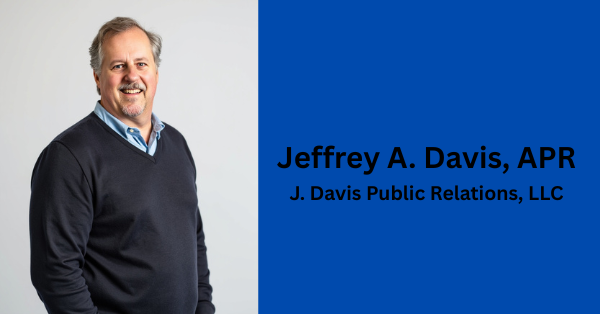
Jeffrey A. Davis, APR - Founder, J. Davis Public Relations, LLC
Jeffrey A. Davis, APR, is principal of J. Davis Public Relations, LLC, a senior-level independent PR consultancy specializing in media relations, media training and crisis communications. A former daily newspaper reporter, he also serves as Regional Editor for Capitol Communicator in Washington, D.C. and is a Founding Member of The Public Relations Collective.