
Crisis Communications
Issues Management
Senior-led crisis communications support that protects trust, sharpens response strategy, and helps organizations navigate high-pressure moments with clarity and control.
The Public Relations Collective helps organizations prepare for risk, respond under pressure, and communicate with discipline when visibility, reputation, and stakeholder confidence are on the line. Our model gives clients direct access to experienced communications professionals who know how to assess complex situations, shape response strategy, and align messaging with the realities of the business.
Not every organization faces the same kind of communications risk. Some need a crisis plan before anything happens. Others need fast response support, leadership messaging, media handling, or stakeholder communications in the middle of a sensitive moment. We build crisis communications strategies around the needs of the client, the realities of the situation, and the goals of the business.
Crisis Communications / Issues Management Services Built Around the Work

What We Deliver
The Public Relations Collective delivers thought leadership support designed around the needs of the client, not the structure of a traditional agency. Our work combines senior judgment, specialized expertise, and the flexibility to match the right support to the right challenge.
Crisis Planning
We help organizations prepare before a high-pressure moment arrives. For the C-suite, strong planning reduces confusion, accelerates decision-making, and creates a more disciplined response when time matters most.
Response Messaging
We develop the messages leaders, teams, and spokespeople need when a situation starts moving quickly. Strong response messaging helps protect trust, reduce inconsistency, and keep the organization aligned under pressure.
Media Handling
We guide organizations through media interest that may intensify during a crisis, issue, or reputational challenge. That matters to senior leadership because one poorly handled interaction can amplify risk instead of containing it.
Stakeholder Communications
We help organizations communicate clearly with employees, customers, partners, investors, boards, franchisees, or other key stakeholders. In difficult moments, silence or inconsistency creates uncertainty that can spread faster than the issue itself.
Ongoing Thought Leadership Counsel
We provide ongoing support for organizations dealing with sustained scrutiny, reputational tension, or evolving public issues. This gives leadership teams a steadier, more strategic approach to situations that do not resolve in one news cycle.

Executive Counsel
We provide senior-level guidance to leaders making communications decisions in real time. For executives, that means faster judgment, clearer trade-offs, and stronger coordination between business priorities and public response.
Scenario Planning
We help identify likely risks, communication pressure points, and response scenarios before they escalate. This gives leadership teams a more practical view of where exposure exists and how to respond with greater confidence.
Holding Statements and Response Materials
We prepare the language and supporting materials needed to respond quickly and credibly. These tools matter because early communications often shape how a situation is understood.
Internal Alignment Support
We help leadership teams stay aligned across communications, legal, operations, HR, and executive decision-making. That alignment matters because mixed signals inside the organization usually become bigger problems outside it.
How Crisis Communications Supports GEO and AI Visibility
Crisis communications now affects more than headlines and stakeholder perception. It also influences what search engines and AI systems can find, interpret, and surface about your organization.
When a crisis or issue unfolds, confusing, incomplete, or outdated information can spread quickly across digital channels. A disciplined crisis communications strategy helps organizations respond with clearer messaging, stronger source material, and more reliable public context. That matters because search and AI discovery are shaped by the content available online, the consistency of the narrative, and the credibility of the sources associated with the brand.
In practical terms, strong crisis communications can support GEO by reducing ambiguity, strengthening authoritative response content, aligning leadership messaging, and helping your organization present a clearer factual record during high-visibility moments. The goal is not only to manage immediate fallout. It is also to reduce the risk of inaccurate, fragmented, or outdated narratives becoming the dominant version of the story.
Crisis Communications / Issues Management Tactics
Crisis Response Planning
We develop response frameworks, escalation paths, and communication protocols before a crisis hits.
Risk Scenario Mapping
We identify likely pressure points and prepare communications responses for the situations most likely to affect trust or visibility.
Executive Response Messaging
We build message guidance for CEOs and senior leaders who need to speak with clarity during sensitive moments.
Holding Statements
We prepare initial response language that can be deployed quickly when a situation emerges.
Media Response Strategy
We guide how, when, and where to respond to media attention so outreach stays disciplined and aligned.
Stakeholder Message Development
We create communications for employees, customers, investors, boards, partners, and other groups that need timely clarity.
Internal Communications Support
We help organizations communicate clearly inside the business so teams stay informed and aligned.
Reactive Media Support
We help organizations respond to incoming media attention with speed, judgment, and message discipline.
Reputation Monitoring
We track how the situation is being discussed across media and public channels so response strategy can adapt.
Leadership Preparation
We prepare spokespeople and executives for interviews, statements, internal meetings, and high-pressure communication moments.
Ongoing Issues Counsel
We support organizations navigating issues that evolve over time and require steady strategic guidance.
Post-Issue Communications Review
We help leadership teams assess what happened, what worked, and what should be strengthened going forward.
How We Approach Crisis Communications / Issues Management
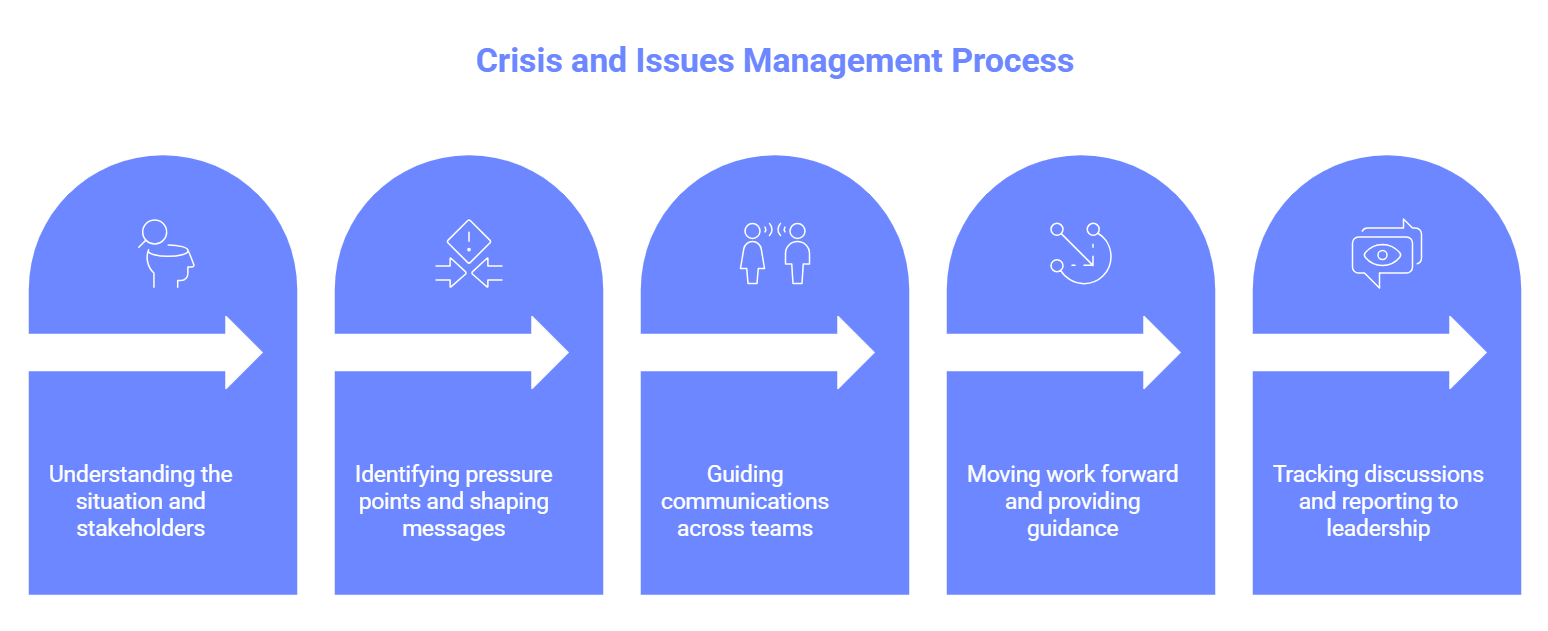
1. Discovery
We start by understanding the situation, the business context, the stakeholders involved, and the communications risk in front of you.
2. Risk and Message Assessment
We identify the pressure points, define the response priorities, and shape the messages needed to support a disciplined approach.
3. Response and Coordination
We guide communications across leadership, media, internal teams, and stakeholders so the response stays aligned and credible.
4. Execution and Counsel
We move the work forward in real time, provide senior-level guidance, and adjust messaging as the situation evolves.
5. Monitoring and Reporting
We track how the issue is being discussed, where messages are landing, and what leadership needs to know to guide next steps.
Built for High-Stakes Moments
Strong crisis communications should do more than help an organization react. It should protect trust, reduce confusion, support leadership judgment, and create the kind of disciplined response that helps the business move forward with credibility intact.
Start the Conversation
If your organization needs crisis communications support grounded in senior judgment, strategic thinking, and experienced response counsel, The Public Relations Collective is ready to help.
Let’s Connect
Crisis Communications / Issues Management FAQ
How do I know if my company needs crisis communications support?
A brand usually needs crisis communications support when a fast-moving issue could affect trust, visibility, stakeholder confidence, or reputation. In many cases, the best time to bring in support is before the situation grows.
What is the difference between crisis communications and issues management?
Crisis communications usually refers to acute, high-pressure situations that require immediate response, while issues management often involves slower-moving reputational, operational, or public-facing concerns that need strategic handling over time.
When should leadership bring in outside crisis support?
Leadership should bring in outside support when the issue carries reputational risk, media attention, stakeholder uncertainty, or internal pressure that requires experienced communications judgment.
What does a crisis communications team actually do?
A strong crisis communications team helps assess the risk, shape response messages, guide leadership communications, manage media attention, support stakeholder outreach, and keep the response aligned as conditions change.
Do you only help once a crisis has already started?
No. We help with proactive planning as well as live response. Strong preparation often makes the difference between a contained issue and a far more damaging one.
How involved does the CEO or executive team need to be?
Executive involvement is often essential, but it should be focused and strategic. A strong crisis communications approach helps leadership use time efficiently while staying visible, credible, and aligned.
Can you work with legal, HR, or internal communications teams?
Yes. Crisis response usually works best when communications is aligned with legal, operational, HR, and leadership priorities. Our role is to help keep that coordination clear and effective.
How do you measure success in a crisis situation?
Success is not always about positive coverage. It is usually about clarity, message discipline, stakeholder confidence, reduced confusion, faster alignment, and limiting reputational damage as the situation unfolds.
Can crisis communications affect what appears in search and AI tools?
Yes. A disciplined response can improve the quality, clarity, and consistency of the information available online, which influences how your organization is understood across search and AI-driven discovery.
What makes one crisis communications team better than another?
The difference usually comes down to judgment, speed, message discipline, and the ability to stay calm while helping leadership make smart decisions under pressure.
Updated June 30, 2026